

At CAS – Clínica Animal do Sul, we help pet owners on a daily basis to understand if their pet is overweight and when it is time to seek veterinary
support.
At CAS, obesity in dogs and cats is one of the issues that frequently comes up in our routine consultations.
We often hear questions such as: “Is he really fat or just stronger?”
Amidst the routine, pampering, and treats, it is not always easy to tell if your pet is overweight.
Identifying excess weight as early as possible is an essential step in protecting your pet’s health, comfort, and quality of life.
Obesity is not just an aesthetic issue or a matter of being “a little too cute.”
It is an excess of body fat that can have serious consequences for the animal’s health.
As with humans, excess weight increases the risk of various diseases and can reduce life expectancy.
Among the most common problems associated with obesity are joint diseases such as osteoarthritis, diabetes, heart and respiratory changes, as well as decreased energy and willingness to play.
During consultations, CAS veterinarians use the Body Condition Score (BCS), a scale from 1 to 9, with BCS 5 being the ideal value.
But at home, there are also simple signs that can help owners realize if something is wrong.
One of the easiest methods is to feel their ribs.
In an animal of ideal weight, the ribs should be easily felt to the touch, without the need to apply force.
When there is excess fat, the ribs become difficult or even impossible to feel.
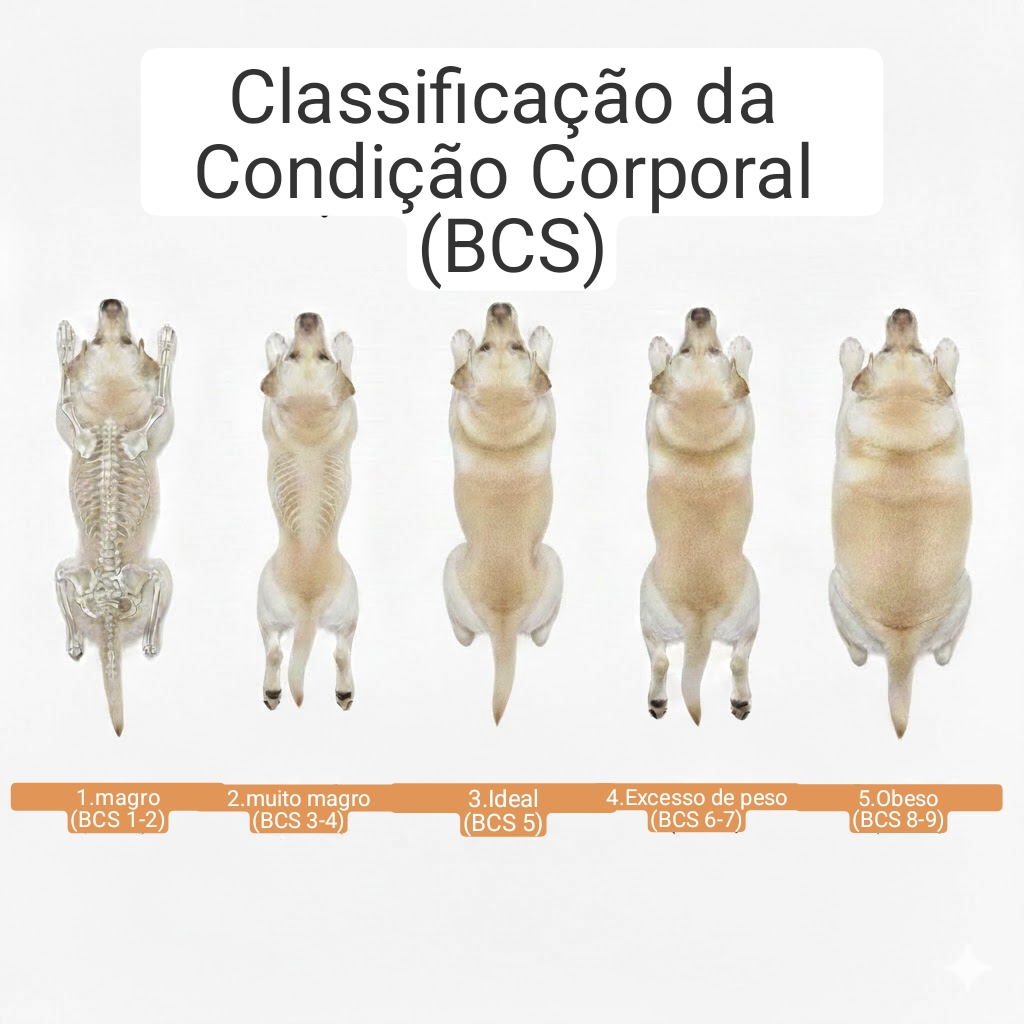
Observing your pet’s body shape also provides important clues.
In dogs, there should be a slight narrowing behind the ribs when viewed from above, and the belly should rise gently toward the pelvis.
In cats, the ideal silhouette resembles an hourglass, with a discreet waist and a slightly pendulous belly.
When there is no visible waist, the body appears more rounded, and the belly is sagging, these are clear signs of excess weight or obesity.
Fat accumulation in areas such as the base of the tail, neck, or sides of the body is another warning sign.
In obese cats, it is common to see a pouch of abdominal fat that moves when they walk.
Whenever you notice these signs, it is best to seek a veterinary evaluation to confirm the situation and receive appropriate guidance.
Weight loss should be done safely, gradually, and tailored to each animal.
At Clínica Animal do Sul, we evaluate each case individually and define personalized plans, which may include specific feeding, portion control, and advice on physical activity.
With prevention, regular monitoring, and the right support, it is possible to restore your best friend’s quality of life and well-being.